
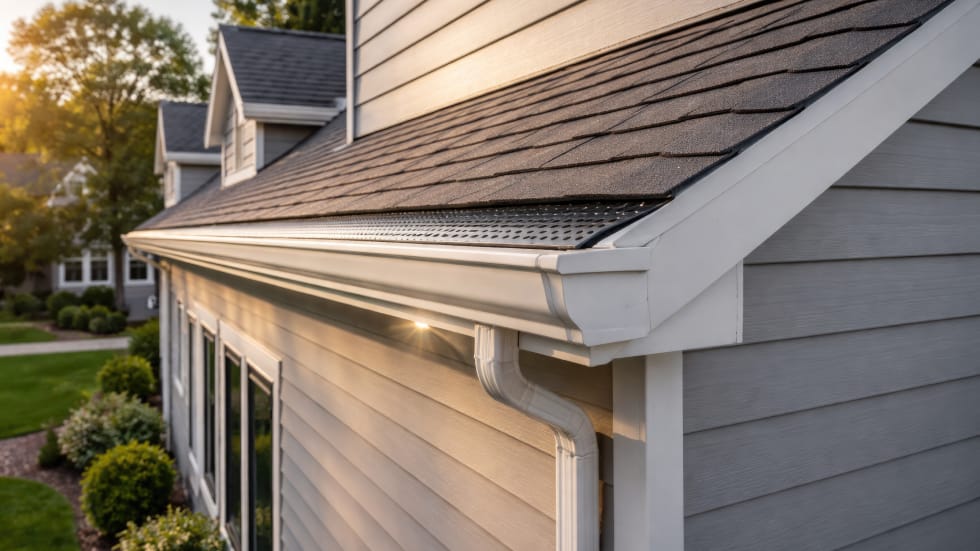
Heavy rain is generally handled well by gutter guards, with roughly 22 inches of rainfall per hour being processed when they’re properly installed; however, guard type and debris conditions cause performance to vary. Larger openings are typically outperformed by micro-mesh guards during intense downpours, though some water overflow should be expected in extreme weather events.
How Gutter Guards Handle Heavy Rainfall
Surface tension and water adhesion are what the physics behind gutter guard performance during heavy rain comes down to. When your roof gets hit by rainwater, it flows down and clings to the guard surface before dropping into the gutter channel. Ontario’s typical rainfall patterns are handled by most quality systems that are engineered for this purpose, which can vary dramatically from light drizzles to sudden intense storms.
But here’s where it gets interesting. How water behaves during those heavy downpours we see across Ontario is significantly impacted by the guard’s material and design. Better water adhesion is created by micro-mesh guards, while some water might be allowed to shoot past during extreme conditions by larger openings.
Performance Varies by Guard Type
Heavy rainfall conditions are responded to differently by different gutter guard systems. Best performance is typically delivered by micro-mesh guards because water clings to the fine surface and flows into gutters more consistently. Water flow can be slowed by foam inserts that become saturated. Water overshoot during intense downpours is sometimes allowed by screen-type guards with larger openings.
From our experience with Ontario homeowners, solid surface guards with a small water entry slot are the most reliable performers during heavy rain. Significant water volume is handled by these systems while debris gets kept out. Plus, mid-storm clogging is less likely when you need them most.
Installation Quality Matters Most
More heavy rain problems are created by poor installation than guard type selection. Water can pool or flow incorrectly when guards aren’t properly pitched or secured. Adequate slope is needed by the gutter system, and guards must align with that pitch to function properly during intense rainfall.
This was learned the hard way by one landlord in Mississauga. Water was overflowing despite new guards after a spring storm. It turned out that proper gutter slope hadn’t been maintained by the installation crew. The system handled subsequent heavy rains without issue once this was corrected.
Ontario’s Weather Patterns and Guard Performance
Unique challenges for gutter protection systems are presented by Ontario’s climate. High water volumes are created by spring snowmelt combined with rain. Significant rainfall can be dumped in short periods by summer thunderstorms. Leaves and debris that can impact guard performance right before winter are brought by fall.
Rainfall rates well above what Ontario typically experiences are what most gutter guards are tested for. However, performance can be affected over time by the combination of debris, ice, and varying temperatures. More importance in our climate is gained by regular maintenance than in areas with more consistent weather patterns.
Debris Impact During Heavy Rain
Significantly better performance during heavy rainfall is delivered by clean gutter guards than those with accumulated debris. Reduced water flow can be experienced by even micro-mesh systems when leaves, twigs, or granules build up on the surface. Alternative paths are forced to be found by water when the debris acts like a dam.
Funny enough, additional surface area for water adhesion is actually created by some debris during light rain. But that same debris becomes problematic during heavy downpours. Optimal performance year-round is maintained by seasonal cleaning, as most Ontario homeowners find.
When Water Overflow Occurs
Normal overflow can occur during extreme rainfall events, even with quality gutter guards installed. The key is distinguishing between normal overflow and system failure. At gutter joints or during rainfall rates exceeding 20+ inches per hour, normal overflow typically occurs.
Installation problems, undersized gutters, or significant debris buildup are usually indicated by system failure overflow. An issue requiring attention is suggested if overflow occurs during moderate rainfall. Ontario’s typical heavy rain is handled without problems by most properly functioning systems.
Making the Right Choice for Your Property
Your roof type, typical debris load, and local weather patterns require consideration when choosing effective gutter guards for heavy rain performance. Best results are generally seen by Ontario homeowners with micro-mesh or solid surface systems that match their specific situation.
The first major storm season typically sees the investment in quality gutter guards and professional installation pay off. If gutter guards installation for your Ontario property is being considered, I suppose visiting our website would be the next step to learn more about options that perform well in our climate conditions.
FAQ
Q: What happens when it rains really hard with gutter guards? Most water gets channeled into the gutter system as designed by well-installed guards. Some overflow might occur during extreme downpours, but that’s typically normal. Significant water volume is what the guards are built to handle.
Q: Do gutter guards make water overflow worse? Look, this is a common worry. Problems can be created by poor installation or wrong guard type, but overflow is actually reduced by quality systems through preventing clogs. The key is matching the guard to your roof’s water flow patterns.
Q: Should I remove guards before heavy rain season? Fair point to consider, but no. Their purpose gets defeated by removing guards and leaves gutters vulnerable to clogging. Better performance during heavy rain is provided by properly maintained guards than unprotected gutters filled with debris. That still surprises people.