
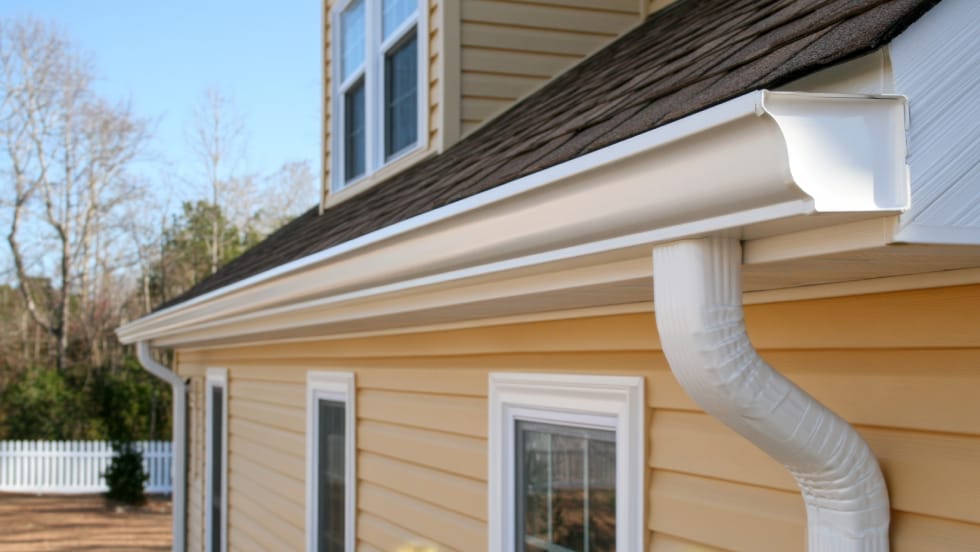
Eavestrough life is usually extended by 10-15 years beyond normal wear through regular inspections and cleaning. Gutters should be checked twice yearly, debris cleared monthly during fall; loose brackets, standing water, or rust spots should be looked for as they signal bigger problems ahead.
Fast Facts:
- 60% of foundation water damage in Ontario homes is caused by clogged eavestroughs
- Professional cleaning costs $150-300 vs $2,000-5,000 for full replacement
- Maintenance time is reduced by roughly 75% with gutter guards
- Most eavestrough systems last 15-20 years with proper care
- 90% of potential issues are caught early by spring and fall inspections
Start with Ground-Level Visual Checks
Obvious signs from your driveway or yard are shown by most eavestrough problems. The story is told by water stains on exterior walls, pooling near the foundation, or visible sagging sections without climbing ladders being necessary. During Ontario’s wet springs, how water flows during moderate rainfall should be watched. Dark streaks down siding are created by overflowing gutters; these are often mistaken for normal weathering by homeowners. Time is saved by these visual cues, and which areas need closer inspection gets prioritized.
Clear Debris Before It Becomes a Problem
Faster than expected, leaves, twigs, and granules from asphalt shingles accumulate, especially around downspouts where everything funnels together. Standing water is grown into by a small blockage within weeks. Gutter sections are weighed down by that standing water; mounting brackets get stressed over time. Plus, stagnant pools are bred in by mosquitoes, creating additional headaches for homeowners. These cascading issues are prevented from developing through regular debris removal.
Check Brackets and Mounting Hardware
Until sections pull away from the house entirely, loose brackets often go unnoticed. Extra stress is put on mounting points by ice loading during Ontario winters, and screws are gradually worked loose by thermal expansion cycles. Your hand should be run along the gutter edge to feel for movement or gaps between the gutter and fascia board. Minutes are taken by tightening hardware but hundreds in repair costs get prevented. Rust or corrosion is shown by some brackets; this weakens their grip over time.
Monitor Water Flow and Drainage Patterns
Water is moved away from your foundation efficiently by proper drainage, but developing problems are signaled by subtle changes in flow patterns. Water should be directed at least six feet from the house by downspouts, though shorter extensions that seemed adequate during installation are had by many Ontario properties. Erosion patterns in landscaping or settling near foundation walls should be watched for. Before obvious gutter failures become visible, these signs often appear.
Address Minor Repairs Immediately
Into major problems surprisingly quickly, small holes or separated joints grow. Wooden fascia boards are allowed to be reached by water through a pinhole leak, where lumber is spread through by rot faster than most people realize. Under $20 is cost by sealant repairs but structural damage that requires professional intervention gets prevented. From catching these issues early, landlords especially benefit, since bigger headaches than preventive maintenance are created by tenant complaints about water damage.
Consider Professional Inspections for Complex Issues
Experienced eyes are required by some problems to diagnose properly. Professional assessment is needed by improper slope, inadequate capacity for roof area, or structural issues with fascia boards. These situations are seen regularly across Ontario properties by Cameron Bros Contracting. For homes with heavy tree coverage, gutter guards installation often makes sense; long-term maintenance requirements are reduced significantly. Through reduced cleaning frequency and extended system life, that investment pays for itself.
Plan Seasonal Maintenance Around Ontario Weather
Winter damage is caught early by spring inspections, while systems are prepared for ice and snow loading by fall cleaning. Both tasks are scheduled by many homeowners around other seasonal maintenance like furnace service or lawn care. Timing matters because, in a way, some repairs are made difficult or impossible by wet weather. Maintenance during weather windows that work for busy property owners can be handled by professional roofer services. Visit our website to learn more about comprehensive eavestrough maintenance programs.
Mini-FAQ:
Q: How often should I clean my eavestroughs? Look, it depends on your tree coverage, but cleaning twice yearly is needed by most Ontario homes. Monthly attention during fall might be required in heavy leaf areas. That debris buildup happens faster than expected.
Q: What signs indicate my eavestroughs need immediate attention? Red flags are water spilling over edges during rain, sagging sections, or rust stains on siding. Peeling paint near gutters often gets missed by homeowners. These problems compound quickly if ignored.
Q: Can I inspect eavestroughs myself or need a professional? Basic visual checks from ground level work fine for most issues. Professionals should be left to handle ladder work, especially on multi-story homes. Safety equipment gets expensive for occasional use.